


Off-Grid Solar Inverter Buying Guide: How to Choose the Best Home Inverter
Overviews
- What is an off-grid inverter?
- How is an off-grid inverter different from a grid-tied inverter?
- How to choose an off-grid inverter?
- FSP Solar Inverter – Key Features
- Recommendation for FSP off-grid inverter!
Author: FSP Group
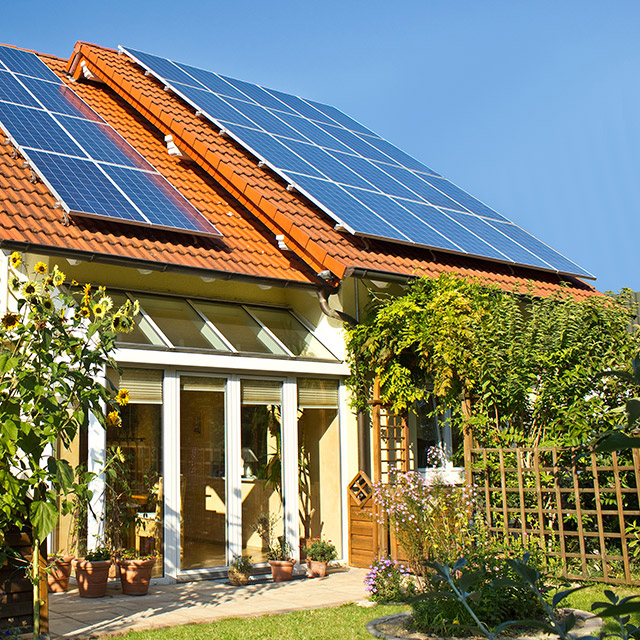
As the world moves toward energy transition, power stability and renewable energy utilization have become critical topics in Taiwan and worldwide. According to Taiwan’s “Major Blackout Records,” there were 12 large-scale outages between 1988 and 2017, and 3 major outages occurred within just 2021–2022. This highlights the persistent risks in power supply. At the same time, global adoption of green energy continues to accelerate. Industries such as solar and offshore wind power are rapidly expanding, leading more households and businesses to install solar panels and contribute to environmental sustainability.
However, if house owners cannot sell the surplus power to the Taiwan Power Company, they have to install an inverter in order to use power generated through solar panels. Therefore, in this paper, we will explain how inverters operate and how to select an inverter that truly meets your needs.
What is an off-grid inverter?
An off-grid inverter is a solar inverter that is grid independent, which means it cannot operate with the public grid, and can serve as a power source through generating a square wave (or sine wave) alternating output. In other words, when you combine a solar energy system with an off-grid inverter that is capable of converting direct current (DC) from a battery to alternating current (AC), you get yourself an independent power source to satisfy your energy needs.
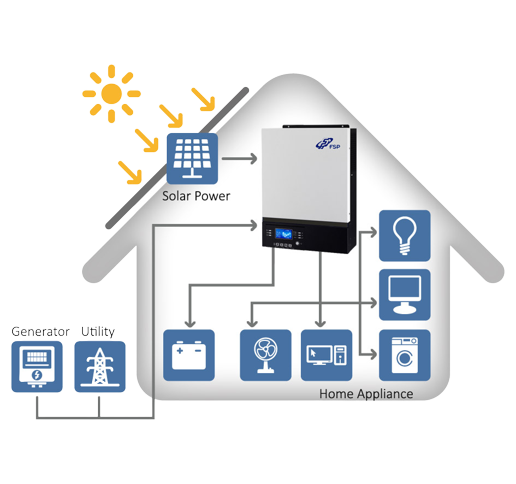
Figure: Illustration of off-grid inverter operations
The purpose of an inverter is to convert DC generated through a solar energy system to AC required by home appliances. Also, an inverter can not only convert power, but it can monitor other devices, too.
How is an off-grid inverter different from a grid-tied inverter?
Off-grid and grid-tied inverters are two types of solar inverters, each designed for a different purpose. The key difference between them is their connection between the local loads and the power grid:
- A grid-tied inverter is designed to work with a grid-connected solar system. It converts DC power produced by solar panels into AC power that can be used by appliances and electronics in a home or business. When the solar panels produce more power than is needed, the excess power is sent back to the electrical grid, often resulting in a credit on the homeowner's electricity bill. Grid-tied inverters do not provide backup power in the event of a power outage and are reliant on the grid's stability and availability.
- An off-grid inverter works alone and cannot feedback current to the grid. The off-grid inverter produces energy from the battery, transforms it from DC to AC loads.
How to choose an off-grid inverter?
With these details above, our primary focus now is to share our insights on how to choose an off-grid inverter. There are three key points:
System capacity:
When you select an off-grid inverter, the system size is one of the primary considerations and you need to estimate how much power your home appliances consume. For example, you plan to have two 70W fans, one 160W fridge and one 100W television powered by an inverter, and their power requirements are 70W, 160W and 100W, respectively. The total power required then is 400W (or 70W * 2 + 160 W + 100W).
VA rating:
The VA rating refers to the solar inverter's VA rating and the best way to estimate your VA rating is to divide the total power required (in Watts) by efficiency (usually 0.8). For example, the total power required in the previous example is 400W, so the VA rating is 500VA (or 400/0.8)
Waveform type:
Inverters can be further categorized into pure sine wave inverters, modified sine wave inverters and square wave inverters. The key distinction is the number of supported appliances. Most appliances only work with the pure sine wave inverter, whereas the modified sine wave inverter can only be used by a limited number of devices. Appliances that can work with a square wave inverter are rarely seen.
FSP Solar Inverter – Key Features
1. Pure Sine Wave Output for Wide Load Compatibility
Multiple models provide pure sine wave inversion, ensuring stable operation of household appliances, commercial equipment, and energy storage systems while minimizing waveform distortion risks.
2. Dual Input Design Compatible with Utility, Generators, and Solar Panels
Supports both utility grid and generator input. Certain models also accept direct DC input from solar panels and energy storage systems, maintaining operation during grid instability or off-grid scenarios.
3. Parallel Operation for High Scalability
Suitable for home and small commercial systems; supports parallel operation—up to 6 inverters in parallel for a total capacity of up to 90 kW—enabling flexible system expansion.
4. Outdoor-Ready with High Protection Rating (IP65) & Smart Monitoring
Selected outdoor models feature an IP65 dustproof and waterproof rating, ideal for rooftop, open-space, or high-humidity environments. Integrated Wi-Fi, Bluetooth, and mobile monitoring apps enable remote system management.
Energy Storage Support for Off-Grid & Backup Applications
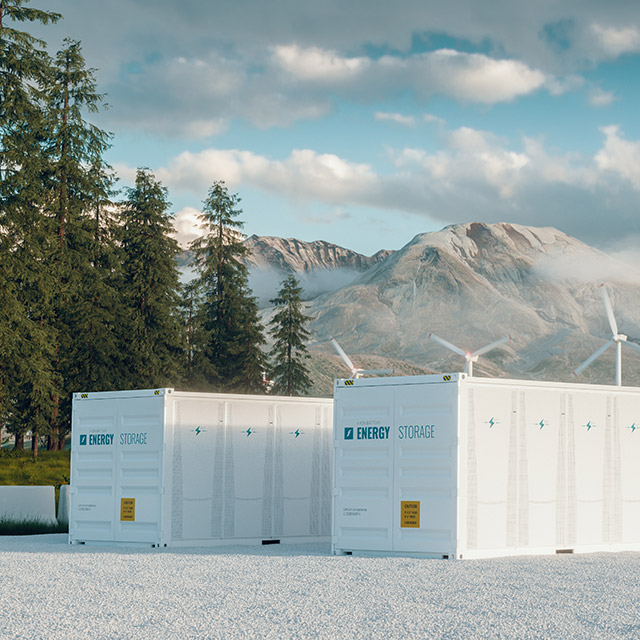
In addition to grid-tied systems, FSP also offers off-grid and backup inverters, suitable for residential areas, remote regions, microgrids, or emergency backup power—supporting energy independence and resilient power supply.
Recommendation for FSP off-grid inverter!
As the market is flooded with inverters of different types and specifications, let's focus on the LightUp P5000, a popular inverter that meets the demand of most house owners, so that you can quickly understand how inverters work.
The FSP LightUp P5000 is a pure sine inverter (a feature required by most appliances) and can supply a total power of 5kW with a VA rating of 10000. Additionally, users can monitor the inverter status through their Bluetooth devices. From the overall specification, the FSP LightUp P5000 is an ideal inverter choice for most house owners and therefore, we recommend it for your inverter purchase.
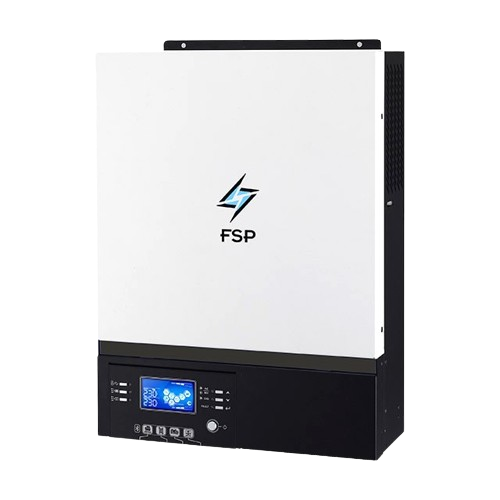
Figure: LightUp P5000 (Product Details)
With our introduction above, you should have a clear understanding about off-grid inverters and grid-tie inverters. As energy shortage issues and green energy policies continue to take the center stage, solar energy becomes an irreversible trend. Many companies have already started to push the idea of "citizen power plants" and encourage house owners to install solar panels to speed up the development of solar power generation. Since mass blackout issues (a.k.a transformer overloading) are likely to get worse in the future, we, the house owners, may consider the combination of solar energy systems and inverters as the solution to address power insufficiency problems.
| FSP Smart Microgrids Microsite |


Related Articles


About FSP
FSP Group is one of the global leading power supply manufacturer. Since 1993, FSP Group has followed the management conception “service, profession, and innovation” to fulfill its responsibilities as a green energy resolution supplier.